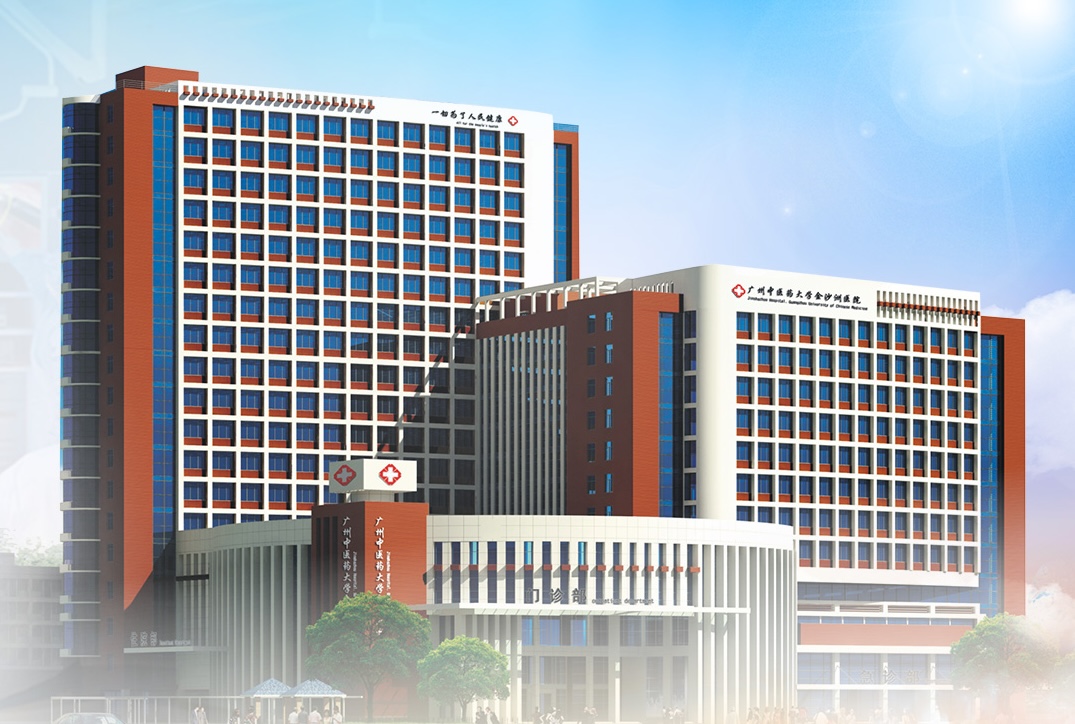
Jinshazhou Hospital of GZUCM
When You Need More Than What's Available at Home

There Are Options
They Haven't Tried Yet

8 advanced cancer technologies — most unavailable or on long waitlists in the Philippines — delivered through a unified 5-specialist treatment plan at Jinshazhou Hospital of GZUCM in Guangzhou, with MDT case reviews typically returned within 72 hours. This is what Tel found when Philippine medicine had run out of answers.

Why Families Turn to Jinshazhou When Options Run Out

Jinshazhou Hospital of GZUCM isn't a last resort — it's where families come when they want precision, speed, and access to technologies that haven't reached the Philippines yet.

🌿
East Meets West Medicine The Integrative Advantage

Western medicine attacks the tumour; TCM protects the patient. Herbal immunotherapy, acupuncture, and a structured 3-stage recovery protocol reduce chemo side effects, accelerate immune recovery, and create a body environment that resists recurrence — a dual-track approach unavailable in most Philippine oncology centres.

🎯
8 Advanced Technologies, One MDT Plan Precision Tools + Unified Expert Team

CyberKnife M6, NanoKnife, Proton Therapy, HIFU, Cryoablation, and more — all evaluated by a tumour board of ~10 doctoral-level specialists who deliver one unified written treatment plan within 72 hours. No fragmented second opinions. One team, one plan, one direction.

🏅
Globally Accredited, Significantly Cheaper JCI · CAP · OECI — 40–60% Less Than Western Rates

The hospital operates under JCI, CAP, and OECI standards — the same benchmarks used in top US and European cancer centres. Yet treatments cost 40–60% less than comparable Western procedures (CyberKnife 75–85% cheaper; TomoTherapy 80–90%). Includes 500 VIP international wards, visa support, and a dedicated multilingual coordinator from day one.

8 Advanced Cancer Technologies

Jinshazhou Hospital of GZUCM provides access to world-class minimally invasive oncology tools — many of which are either unavailable in the Philippines or have waiting lists of months to years.

Precision Radiation
🎯 CyberKnife
Best for
Brain, spine, lung, prostate, and hard-to-reach tumours where surgery isn't possible

A robotic radiation system that bends beams around your body to hit the tumour from hundreds of angles — with no surgery, no cuts, and no hospital stay.

Scenario:

A 58-year-old man was told his 2.5 cm lung tumour was inoperable. His lung function ruled out surgery, and his oncologist at home had no other options to offer. At GZUCM, the MDT recommended CyberKnife — a robotic radiosurgery system that tracks the tumour in real time as a patient breathes, bending 1,200 radiation beams around anatomy with sub-millimetre accuracy. Three sessions over one week. No incision. No admission. At three months, follow-up imaging showed complete tumour response. He flew home without a scar.

🔬 Proton Therapy
Best for
Paediatric cancers, brain tumours, and cases where protecting nearby organs is critical

A beam of charged particles that delivers its full energy directly at the tumour — then stops. Healthy tissue beyond the tumour receives almost no radiation at all.

Scenario:

A 9-year-old girl had a brainstem glioma. She needed radiation — but conventional X-ray therapy would scatter dose through her developing brain, risking cognitive damage, hearing loss, and hormonal disruption for the rest of her life. Proton therapy works differently: the beam deposits its maximum energy precisely at the tumour depth, then stops. No exit dose. Her surrounding brain tissue was preserved. Within weeks of finishing treatment, she was back in school.

☢️ Particle Knife (125I Seeds)
Best for
Prostate, lung, liver, and recurrent tumours requiring sustained internal radiation

Tiny radioactive seeds placed inside the tumour that silently emit radiation from within — for months — until the cancer is gone. Nothing enters the bloodstream.

Scenario:

A 55-year-old man had recurrent lung cancer. Prior surgery had left him with limited pulmonary reserve — re-operation wasn't viable. His tumour, 3 cm, sat in a location that made external beam radiation imprecise. Under CT guidance, radioactive iodine-125 seeds were implanted directly into the mass — delivering continuous low-dose radiation from the inside, over six months, without touching the surrounding lung. The tumour shrank by 80%. He had no systemic side effects. The seeds remain in place permanently, inert after decay.

Minimally Invasive Ablation
Nanoknife (IRE)
Best for
Pancreatic, liver, kidney, and prostate cancers near critical structures that cannot be safely heated or cut

Electrical pulses that destroy cancer cells from the inside out — without heat. Safe to use right next to blood vessels, bile ducts, and nerves that other methods would damage.

Scenario:

A woman with stage 3 pancreatic cancer had a tumour wrapped around her superior mesenteric artery — one of the vessels that keeps the intestines alive. Every conventional surgeon who reviewed her case said the same thing: inoperable. Heat-based ablation would risk the artery. At GZUCM, the MDT recommended Nanoknife — Irreversible Electroporation. Electrical pulses were delivered directly to the tumour, disrupting cancer cell membranes at the molecular level without generating heat. The artery was untouched. The tumour was ablated. Chemotherapy resumed the following week.

❄️ CSA Cryotherapy
Best for
Liver, kidney, lung, and prostate cancers in patients unfit for surgery or radiation

A probe that freezes the tumour to -160°C, destroying it completely. Done through a small puncture, often in a single session, with no need for general anaesthesia.

Scenario:

A 70-year-old man had early-stage prostate cancer and a list of comorbidities — heart disease, diabetes, poor renal function — that made surgery and radiotherapy too risky to consider. His family had been told to watch and wait. The MDT reviewed his case and recommended argon-helium cryotherapy: a cryo-knife probe inserted under ultrasound guidance, freezing the tumour to -160°C while a warming catheter protected the urethra. One session. No general anaesthesia. He was discharged the same day. PSA levels normalised within three months.

🔊 HIFU
Best for
Liver, pancreatic, bone tumours, and uterine fibroids where complete non-invasiveness is required

Focused sound waves directed at the tumour from outside the body, generating heat that destroys it from within. No incision. No radiation. No anaesthesia.

Scenario:

A 45-year-old woman had a 4 cm liver tumour. She wasn't opposed to treatment — she was opposed to surgery. She had watched her father recover from a hepatic resection and refused to go through the same. The MDT offered HIFU: High Intensity Focused Ultrasound, which converges acoustic energy on the tumour from outside the body, heating it to destruction without a single incision. No cuts. No radiation. No general anaesthesia. She was discharged the same afternoon. Two days later, she was back at work.

Interventional & Systemic
💉 TACE / HAIC
Best for
Primary liver cancer (HCC) and liver metastases where surgery isn't immediately possible

Chemotherapy delivered directly into the artery feeding the tumour — starving it of blood supply while flooding it with drugs, without exposing the rest of the body.

Scenario:

A 52-year-old man with hepatitis B had three liver tumours — ranging from 3 to 6 cm — that were too numerous and too vascular for surgical resection. Systemic chemotherapy would flood his entire body with toxicity to reach lesions his liver was already struggling to handle. TACE offered a different path: a catheter threaded through the femoral artery directly into the hepatic vessels feeding each tumour, delivering chemotherapy at the source while simultaneously embolising — cutting off — the blood supply that was keeping the cancer alive. Two sessions over eight weeks. CT at three months confirmed necrosis in all three lesions. He was reassessed for curative resection.

🧬 Targeted Therapy & Immunotherapy
Best for
Lung, breast, colorectal, gastric, and blood cancers with actionable biomarkers — especially where newer agents aren't yet available locally

Drugs designed for your tumour's specific genetic mutation — not a general attack on all fast-growing cells, but a precise match to what is driving your cancer.

Scenario:

A non-smoking woman in her late 40s was diagnosed with stage 4 lung adenocarcinoma. In the Philippines, her oncologist recommended standard chemotherapy — the tumour hadn't been molecularly tested. At GZUCM, biomarker testing revealed an EGFR exon 19 deletion. She was prescribed a third-generation EGFR inhibitor — a drug that had not yet been approved in the Philippines at the time. Within eight weeks, her primary lung tumour had shrunk by 60% and her bone metastases had stabilised. She managed her entire treatment as an outpatient, without a single hospital admission.

⚠️ Note: Not all technologies are available for every cancer type or stage. Eligibility is determined during the MDT case review. The scenarios above are illustrative examples and do not represent guaranteed or typical outcomes. Individual results vary based on cancer type, stage, overall health, and other clinical factors. MediDocPH does not make any promise or guarantee of treatment results.

The MDT Model: One Patient, One Unified Plan

In the Philippines, most cancer patients move through the system alone — one referral at a time. You see a surgeon. The surgeon sends you to an oncologist. The oncologist refers you to a radiologist. Each doctor makes their call in isolation, without knowing what the others are thinking. Weeks pass. Decisions get made in silos.

At GZUCM, that doesn't happen. The moment your clinical dossier arrives, it is placed in front of a full Multidisciplinary Team — five specialists who each review your case independently, then sit together, challenge each other's assumptions, and reach consensus before anyone says a word to you.

What you receive at the end isn't five separate opinions you have to reconcile on your own. It's one document — a unified written treatment plan — that reflects the collective judgment of a surgeon, a radiation oncologist, a medical oncologist, a radiologist, and a TCM integrative specialist, all working from the same file, in the same room, on your case.

The specialists behind this process are not generalists filling a seat. Jinshazhou Hospital handles 1.2 million outpatients and 35,000 surgeries annually — a clinical volume that produces a depth of pattern recognition most hospitals never reach. Dr. Tan Yongcai alone has performed over 5,000 operations. The faculty includes nearly 10 dean-level experts and doctoral supervisors who have collectively published over 270 academic papers and hold 11 patents.

Several MDT leaders bring decades of international training. Dr. Wang Yang and Dr. Zhang Yanjun spent years in Australia and the United States specialising in advanced radiotherapy — and brought that expertise back to a hospital where it is applied daily, at scale, on cases like yours.

1.2M+ Annual Outpatients
35,000+ Surgeries / Year
270+ Academic Papers
11 Patents Held

This matters more than it might sound. Many Filipino families arrive at GZUCM after months of back-and-forth between specialists at home — a surgeon who recommended waiting, an oncologist who suggested chemo first, a radiologist who wasn't sure. By the time they reach us, they are exhausted, confused, and no closer to a decision. The MDT process cuts through all of that. It replaces the noise with clarity.

The plan you receive is also not static. As your treatment progresses — after surgery, mid-chemotherapy, post-radiation — the MDT reconvenes. New imaging, new labs, new clinical data are fed back into the panel. The plan evolves with you, not ahead of you.

⏱️

From the moment your dossier arrives to the moment the plan is in your hands — typically 72 hours. One process, one coordinated outcome.

What Happens When Your File Arrives

The moment your clinical dossier reaches GZUCM, it doesn't land on one doctor's desk — it lands on five.

🖥️
The Radiologist goes first.

Before anyone else says a word, the Diagnostic Radiologist pulls up your CT scans, PET images, and MRIs. They map the tumour in three dimensions — its size, its borders, which vessels it's touching, how close it sits to critical structures, whether lymph nodes are involved. They look for things a referring doctor may have missed. This radiological picture becomes the shared visual language for every specialist that follows. Without it, the rest of the panel is guessing.

🩺
Then the Surgeon weighs in.

Armed with that imaging, the Surgical Oncologist asks the hard question: can this be cut out — and should it be? They assess resection margins, vascular involvement, your performance status, and your fitness for anaesthesia. They consider whether surgery now would compromise later treatment options. Often, their answer shapes everything else — and sometimes, their answer is that surgery should wait, or not happen at all.

🎯
The Radiation Oncologist plots the beam.

With the tumour mapped and surgical options on the table, the Radiation Oncologist determines whether CyberKnife, Proton Therapy, TomoTherapy, or 125I seed implantation can do what surgery cannot — reaching the tumour with sub-millimetre precision while sparing healthy tissue entirely. They calculate dosing, fractionation, and sequencing relative to any planned chemotherapy, so the two don't work against each other.

🔬
The Medical Oncologist reads your biology.

Your pathology report and molecular biomarker panel tell this specialist what your tumour is made of — and what it will respond to. EGFR mutation? HER2 amplification? PD-L1 expression? MSI-high status? They match your tumour's molecular fingerprint to the most effective targeted agent or immunotherapy regimen available. Many of these drugs are approved and accessible in China months or years before they reach the Philippines or other ASEAN markets.

🌿
Finally, the TCM Specialist protects you.

While the others plan how to attack the tumour, the Traditional Chinese Medicine specialist plans how to protect you. They design a complementary protocol — herbal supportive formulas, acupuncture to help manage pain and nausea, and a structured 3-stage recovery plan covering the first month post-surgery, the adjuvant therapy window, and long-term consolidation. The goal is not just survival. It is to keep your body as strong as possible throughout treatment and beyond.

Then they sit in the same room.

Every specialist presents their independent findings. Disagreements surface. Assumptions get challenged. A surgeon might recommend resection; the radiation oncologist might argue CyberKnife achieves the same outcome with a shorter recovery. The medical oncologist might flag a biomarker that changes the sequencing entirely. This tension is the point — because the plan that emerges from it is stronger than any single specialist could have produced alone. In most cases within 72 hours, that plan is written, signed, and in your hands.

Jinshazhou Hospital of Guangzhou University of Chinese Medicine

Jinshazhou, Baiyun District, Guangzhou, People's Republic of China

Jinshazhou Hospital of GZUCM is a tertiary integrative oncology centre affiliated with Guangzhou University of Chinese Medicine — one of China's leading institutions for the integration of Traditional Chinese Medicine and evidence-based Western oncology. It is among a small number of hospitals in Asia offering eight advanced minimally invasive cancer technologies under a single roof, reviewed by a unified 5-specialist MDT team for every case.

Est. 1956

Third-Level Class-A Hospital (三甲) — China's Highest Hospital Classification

4+

Affiliated Hospitals

1.2M+

Outpatient Visits / Year

35,000+

Surgeries / Year

Accreditations

  • Third-Level Class-A Hospital (三甲) — National Health Commission of China
  • National Key Discipline: Integrative Oncology (Tumour Science)
  • Guangdong Province Advanced Integrative Cancer Treatment Centre
  • Affiliated Teaching Hospital, Guangzhou University of Chinese Medicine (est. 1956)
  • ISO 9001 Quality Management System Certified

Key Highlights

  • 8 advanced cancer technologies under one roof — most unavailable in the Philippines
  • Every case reviewed by a 5-specialist MDT before treatment begins
  • 72-hour case review turnaround from dossier submission to written plan
  • Dr. Tan Yongcai: 5,000+ operations; ~10 dean-level doctoral supervisors on faculty
  • International MDT training: Australia (radiation) and United States (oncology)
  • Integrative TCM protocols alongside every Western treatment course
  • Clinical volume: 1.2M outpatients and 35,000 surgeries per year
  • 270+ peer-reviewed academic publications and 11 active patents
Tel

Tel received Local Targeted Chemotherapy here

After Stage 3 Cervical Cancer, a colostomy, a nephrostomy, and years of fighting, Tel and Kel found Jinshazhou Hospital of GZUCM. She underwent Local Targeted Chemotherapy — a precision treatment designed to attack the tumor directly while sparing the rest of the body. It gave her something no one had promised: time.

She celebrated Christmas at home that year. Her birthday. Ordinary moments made extraordinary by everything it had taken to reach them. That is what this platform is built to find for your family.

Read Tel's Full Story →

Don't Wait for Options to Run Out

Cancer is time-sensitive. In 72 hours, five specialists can review your case and deliver a unified treatment plan — at no cost to begin. Check your eligibility today.

Free to start · No commitment · Response within 24 hours

WhatsApp Viber Messenger Email